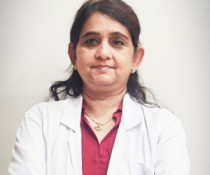

Reviewed by Dr. Mamta Gupta Srishti Fertility Hospital & IVF Center, Jaipur
A follicular study is a series of transvaginal ultrasound scans that track how your ovarian follicles grow across your menstrual cycle, helping your doctor pinpoint your exact ovulation day. Most cycles need 3 to 5 scans, starting around day 9 or 10, and it’s one of the more dependable ways to plan natural conception, IUI, or IVF — because it’s based on what’s actually happening in your body, not on averages.
Why This Matters More Than You Think
Maybe you’ve been marking your calendar for months now. You’ve tried the ovulation kits from the pharmacy. Downloaded an app that tells you it’s your “fertile window” based on a 28-day cycle you don’t actually have. And after all that effort, you’re still not entirely sure when you ovulate — or if you even do, every month.
We hear this a lot from couples who walk into Srishti Hospital in Jaipur. It’s frustrating, and honestly, a little exhausting. The good news is you don’t have to keep guessing. A scan like this replaces assumptions with something more solid — real images from inside your ovaries, taken over several days, instead of a generic formula that may not apply to your cycle at all.
What Is a Follicular Study?
At its core, a follicular study — sometimes called follicular monitoring, or an ovulation study — is simply a way of watching your follicles grow, scan by scan, over roughly a week to ten days. Follicles are small fluid-filled sacs inside your ovaries, and each one holds a developing egg.
Every cycle, a handful of follicles start growing. Usually just one of them takes the lead, matures fully, and releases its egg — that’s ovulation. The window is short: an egg only survives about 24 hours after it’s released. So if you’re trying to conceive, knowing that day (not roughly, but specifically) can make a real difference.
The scan itself uses a transvaginal probe rather than the usual abdominal approach, and that matters because it gives a far clearer view of the ovaries. It doesn’t need any special preparation, it’s done right there in the clinic, and most women are in and out within fifteen minutes.
Why Doctors Recommend It
Not every woman needs this test. But there are a few situations where it’s genuinely useful, not just a routine add-on:
- Irregular or unpredictable periods, where cycle-day guessing simply falls apart
- PCOD or PCOS, where multiple follicles form each month but often don’t mature or release properly
- Unexplained infertility — trying for over a year if you’re under 35, or six months if you’re over 35
- Before an IUI or IVF cycle, where timing the procedure correctly is everything
- Checking whether ovulation-inducing medication is actually doing its job
If even one of these sounds like your situation, this kind of monitoring gives your doctor something to work with — actual data, not a best guess.
The Process — Step by Step
Here’s roughly how a monitoring cycle plays out, start to finish:
- Baseline scan (Day 2–3): A first look at the ovaries and uterine lining while everything is still at rest, before follicles have started growing in earnest.
- First monitoring scan (Day 9–10): This is usually when the follicular study USG begins in earnest, once follicles are large enough to measure.
- R:epeat scans every 1–2 days The doctor tracks how much each follicle has grown, watching for it to reach somewhere between 18mm and 24mm — the size that usually signals it’s close to release.
- Endometrial thickness check: Alongside follicle size, the uterine lining gets measured too. Even with perfectly normal ovulation, a thin lining can make implantation harder, so this piece matters just as much.
- Confirmation of ovulation: One final scan checks whether the follicle has actually ruptured and let go of the egg.
Each visit takes about 10 to 15 minutes. Most women describe it as mildly uncomfortable at worst, similar to a routine pelvic exam — not something you need to brace for.
What a Normal Follicular Study Chart Looks Like
A follicular monitoring normal report tends to follow a fairly predictable curve. Here’s roughly what an ultrasound follicular study report might look like across a typical cycle:
| Cycle Day | Follicle Size | Endometrial Thickness |
| Day 9 | 10–12mm | 6–7mm |
| Day 11 | 14–16mm | 8mm |
| Day 13 | 18–20mm | 9–10mm |
| Day 14–15 | 20–24mm (mature) | 10–12mm, trilaminar |
Once a follicle crosses roughly 18mm, and the lining takes on that layered “trilaminar” look, ovulation is usually just 24 to 36 hours away. If your own numbers don’t line up exactly with this chart, try not to read too much into it right away — cycles vary, and your doctor is really the one who can tell you whether the timing needs adjusting or whether everything’s simply running on its own schedule.
Cost in Jaipur
This is probably the question we get asked most, right after “does it hurt.” The honest answer is: it depends on how many scans your particular cycle ends up needing. Some women need three. Others need five or more before the picture is clear.
| Package Type | What’s Included | Approximate Cost |
| Single scan | One monitoring scan | ₹800 – ₹1,500 |
| Standard package | 3–4 scans across the cycle | ₹2,000 – ₹3,500 |
| Complete cycle package | 5+ scans with consultation | ₹3,500 – ₹5,000 |
At Srishti Hospital and IVF Centre in Jaipur, we walk you through the likely cost at your very first visit — not halfway through, once you’re already invested in the process.
vs Other Ovulation Tracking Methods
| Method | Accuracy | What It Actually Shows |
| Ovulation Predictor Kits (OPK) | Moderate | Hormone surge only, not follicle size |
| Basal Body Temperature (BBT) | Low–Moderate | Confirms ovulation after it’s already happened |
| Ultrasound Monitoring | High | Real-time follicle growth and rupture |
OPKs and temperature charts both work indirectly — they pick up a hormone signal or a temperature shift after the fact. This test is different because it shows you what’s happening inside your ovaries as it’s happening, not a delayed echo of it.
Frequently Asked Questions
1. What is the best day to start a follicular study?
Most doctors start monitoring around day 9 or 10 of the cycle, sometimes after an optional baseline scan on day 2 or 3.
2. How many scans are needed for a complete follicular study?
Typically 3 to 5, though it really comes down to how quickly (or slowly) the dominant follicle matures.
3. Is a follicular study painful?
Not really. It’s a transvaginal ultrasound, much like a routine pelvic scan — most women feel a bit of pressure at most, not pain.
4. What does a normal follicular study report look like?
It shows the follicle growing fairly steadily up to 18–24mm, alongside a uterine lining that thickens and takes on a trilaminar pattern right before ovulation.
5. How much does a follicular study cost in Jaipur?
Roughly ₹800 for a single scan, going up to ₹3,500–₹5,000 for a complete monitoring package, depending on the number of scans required.
6. Can this test detect PCOD or PCOS?
Yes — it often picks up the classic pattern of multiple small follicles that never quite mature or release, which is common in PCOD and PCOS.
7. What if the follicle doesn’t rupture?
That’s called an unruptured follicle, and it’s a real (if underdiscussed) reason some women don’t conceive despite having seemingly regular cycles. Your doctor may adjust your medication or suggest a trigger injection to help.
8. How is follicular monitoring different from a regular ultrasound?
A regular ultrasound is a single snapshot — useful, but limited. Monitoring follows the same ovary across several days, so it captures change over time in a way one scan simply can’t.
9. Can I get pregnant naturally after this?
Often, yes. Once you and your doctor know your actual fertile window, many couples go on to conceive without needing further intervention.
READ ALSO – IVF Treatment Cost: Complete Guide to Prices, Procedures, and Safety
Key Takeaways
- A follicular study tracks follicle growth to identify your exact ovulation day
- It typically involves 3–5 transvaginal ultrasound scans starting around day 9–10
- It’s more accurate than OPKs or temperature charting, since it shows real-time growth
- Cost in Jaipur usually ranges from ₹800 per scan to ₹5,000 for a full package
- It’s recommended for irregular cycles, PCOD, unexplained infertility, and before IUI/IVF
Ready to Get Clarity on Your Cycle?
Guesswork has probably taken up enough of your time already. At Srishti Hospital and IVF Centre in Jaipur, Dr. Mamta Gupta and her team have guided thousands of women through this exact process, backed by 24+ years of experience and over 25,000 successful deliveries.
Book your follicular study scan today — call +91-9829671603 or book an appointment online.
Follow us on Facwebook