

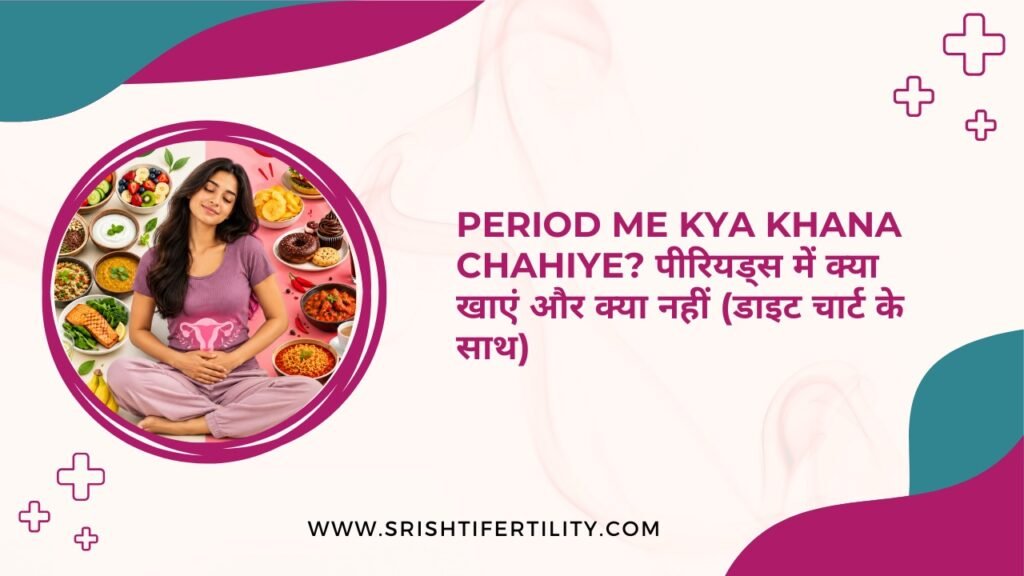
Period Me Kya Khana Chahiye? पीरियड्स में क्या खाएं और क्या नहीं (डाइट चार्ट के साथ)
Period me kya khana chahiye? पीरियड्स में आयरन, प्रोटीन, फाइबर और पानी वाला हल्का घर का खाना खाइए। पालक, चुकंदर, अंडा, दाल, दही और केला अच्छे विकल्प हैं। तला-भुना, बहुत नमकीन और ज़्यादा चाय-कॉफ़ी कम रखिए। पीरियड्स में खाने को लेकर इतनी उलझन क्यों रहती है? पीरियड्स में पेट दर्द, थकान और चिड़चिड़ापन आम है। ऊपर से कोई कहता है “दही मत खाओ”, कोई कहता है “खट्टा बंद करो”। नतीजा, समझ नहीं आता कि सही क्या है। इस लेख में हम आसान भाषा में बताएंगे कि period me kya khana chahiye, क्या कम करना चाहिए और दर्द में क्या करें। यह जानकारी सामान्य मार्गदर्शन के लिए है। यह डॉक्टर की सलाह की जगह नहीं लेती। पीरियड्स में सही खाना क्यों ज़रूरी है? आम तौर पर पीरियड साइकिल 21 से 35 दिन की और ब्लीडिंग 2 से 7 दिन की मानी जाती है। ब्लीडिंग के साथ शरीर से आयरन कम होता है, जिससे कमज़ोरी और चक्कर आ सकते हैं। NFHS-5 (2019-21) के अनुसार भारत में 15 से 49 साल की लगभग 57% महिलाएं एनीमिया से जूझती हैं। इसलिए period me kya khana chahiye, यह सिर्फ़ दर्द का नहीं, ताकत का सवाल है। पीरियड्स हार्मोन से चलते हैं। समझने के लिए पढ़िए हार्मोन क्या होते हैं और कैसे काम करते हैं। Period Me Kya Khana Chahiye? ये 15 फूड्स चुनिए काम की बातें: Periods ke time kya khana chahiye: सुबह से रात तक Period me kya khana chahiye, इसे दिन के हिसाब से बाँट लीजिए: हर 3 से 4 घंटे में कुछ हल्का खाइए। बहुत देर भूखे रहने से कमज़ोरी बढ़ती है। 7 दिन का पीरियड्स डाइट चार्ट सोच रही हैं कि period me kya khana chahiye और इसे रोज़ कैसे बनाएं? यह चार्ट देखिए: दिन नाश्ता दोपहर रात 1 दलिया + केला दाल, रोटी, पालक खिचड़ी + दही 2 पोहा + अनार राजमा, चावल, सलाद सब्ज़ी-रोटी 3 ओट्स + बादाम चना सब्ज़ी, रोटी मूंग दाल सूप 4 उबला अंडा + टोस्ट मेथी पराठा, छाछ दलिया सब्ज़ी 5 इडली + सांभर चुकंदर सलाद, दाल-रोटी पनीर सब्ज़ी + रोटी 6 मूंग चीला सोया सब्ज़ी, रोटी वेज पुलाव + रायता 7 फ्रूट बाउल + मेवे कढ़ी-चावल हल्की दाल-रोटी शाकाहारी हैं तो अंडे की जगह पनीर या दाल लीजिए। पर्सनल प्लान के लिए डाइट काउंसलिंग देखिए। Periods me kya nahi khana chahiye? इन्हें कम कीजिए, पूरी तरह बंद करना ज़रूरी नहीं: Period me dahi, khatta aur egg khana chahiye? दही: हां, सामान्यतः खा सकती हैं। “दही से ब्लीडिंग बढ़ती है” का कोई पक्का वैज्ञानिक आधार नहीं है। ठंड से सर्दी हो जाती हो तो दिन में लीजिए। खट्टा: थोड़ा नींबू या आंवला ठीक है। एसिडिटी हो तो कम कर दीजिए। अंडा: हां। इसमें प्रोटीन, आयरन और विटामिन B12 होता है। उबला अंडा हल्का रहता है। Period ke dard me kya khaye और क्या करें? खाना दर्द का इलाज नहीं, सिर्फ़ राहत देता है। अगर हर महीने दर्द तेज़ रहे, तो उसे “नॉर्मल” मानकर मत टालिए। पेल्विक पेन और मासिक धर्म के दर्द की जांच ज़रूरी है। कई बार वजह एंडोमेट्रियोसिस या यूटरिन फाइब्रॉइड्स होती है। Period me medicine ya dawa khana chahiye? दर्द की दवा अपने मन से बार-बार न लें। लेनी हो तो डॉक्टर या फार्मासिस्ट से पूछकर लें। आयरन सप्लीमेंट भी हीमोग्लोबिन जांच के बाद डॉक्टर की सलाह से ही शुरू कीजिए। पीरियड रोकने या बुलाने की गोलियां भी बिना डॉक्टर के न लें। Period me kya khana chahiye अगर PCOS, थायरॉइड या डायबिटीज़ है? इन स्थितियों में डाइट अलग हो सकती है। जैसे डायबिटीज़ में गुड़ और मीठा सीमित रखना पड़ता है। इसलिए अपने डॉक्टर से पूछकर ही डाइट तय कीजिए। PCOS में पीरियड्स अनियमित हो सकते हैं, इसकी जानकारी PCOD/PCOS पेज पर है। Period aane ke liye kya khaye? (पीरियड लेट होने पर) कोई भी खाना या घरेलू नुस्खा पीरियड की तारीख पक्की नहीं करता, इसलिए अपने मन से कुछ न आज़माइए। लेट होने की वजह प्रेग्नेंसी, तनाव, थायरॉइड, PCOS या वज़न में बदलाव हो सकती है। पहले प्रेग्नेंसी टेस्ट कीजिए, फिर भी पीरियड न आए तो डॉक्टर से मिलिए। पीरियड्स टालने की गलतफहमियों पर हमारा लेख How to Delay Periods Naturally पढ़िए। Period me kya kare aur kya nahi karna chahiye? क्या करें: भरपूर नींद लें, पानी पिएं, हल्का योग या सैर करें, और पैड, कप या टैम्पोन समय पर बदलकर सफ़ाई रखें ताकि इन्फेक्शन से बचें। क्या न करें: लंबे समय तक भूखे न रहें, बहुत भारी एक्सरसाइज़ से बचें और तेज़ दर्द को नज़रअंदाज़ न करें। मिथक: पीरियड्स में नहाना, बाल धोना और रोज़ के सामान्य काम करना बिल्कुल ठीक है। इन संकेतों पर तुरंत डॉक्टर को दिखाइए किशोरियों के लिए जानकारी Adolescence Issues पेज पर है। अगर सिर्फ़ डाइट से बात न बने, तो period me kya khana chahiye से आगे बढ़कर जांच कराइए। Key Takeaways अक्सर पूछे जाने वाले सवाल (FAQs) 1. Period me kya khana chahiye? पालक, चुकंदर, दाल, अंडा, पनीर, फल, दही और खूब पानी। 2. Periods me kya nahi khana chahiye? ज़्यादा तला-भुना, नमकीन, कोल्ड ड्रिंक, मीठा और चाय-कॉफ़ी कम रखिए। 3. Period me dahi khana chahiye ya nahi? हां, सामान्यतः खा सकती हैं। ठंड से परेशानी हो तो दिन में लीजिए। 4. Period me khatta khana chahiye? थोड़ा नींबू या आंवला ठीक है। एसिडिटी हो तो कम कीजिए। 5. Period me egg khana chahiye? हां, उबला अंडा प्रोटीन और आयरन देता है। 6. Period ke dard me kya khaye? अदरक की हल्की चाय, केला, सौंफ का पानी और गुनगुना पानी राहत दे सकते हैं। तेज़ दर्द में डॉक्टर को दिखाइए। 7. Period me dawa khana chahiye? अपने मन से बार-बार नहीं। डॉक्टर या फार्मासिस्ट की सलाह से ही लें। 8. Period aane ke liye kya khaye? कोई खाना गारंटी नहीं देता। पहले प्रेग्नेंसी टेस्ट करें, फिर डॉक्टर से मिलें। 9. Period mein kya nahin karna chahie? लंबे समय भूखे रहना, भारी वर्कआउट और तेज़ दर्द को नज़रअंदाज़ करना। नहाना और बाल धोना मना नहीं है। 10. Periods mai kya kare जब दर्द बहुत हो? सिंकाई, पानी और आराम लीजिए। दर्द न घटे तो गायनेकोलॉजिस्ट को दिखाइए। आखिर में अगर आपको अब भी उलझन है कि period me kya khana chahiye, तो
Period Me Kya Khana Chahiye? पीरियड्स में क्या खाएं और क्या नहीं (डाइट चार्ट के साथ) Read More »