

Preconception Checkup: What Tests Are Needed Before Pregnancy?
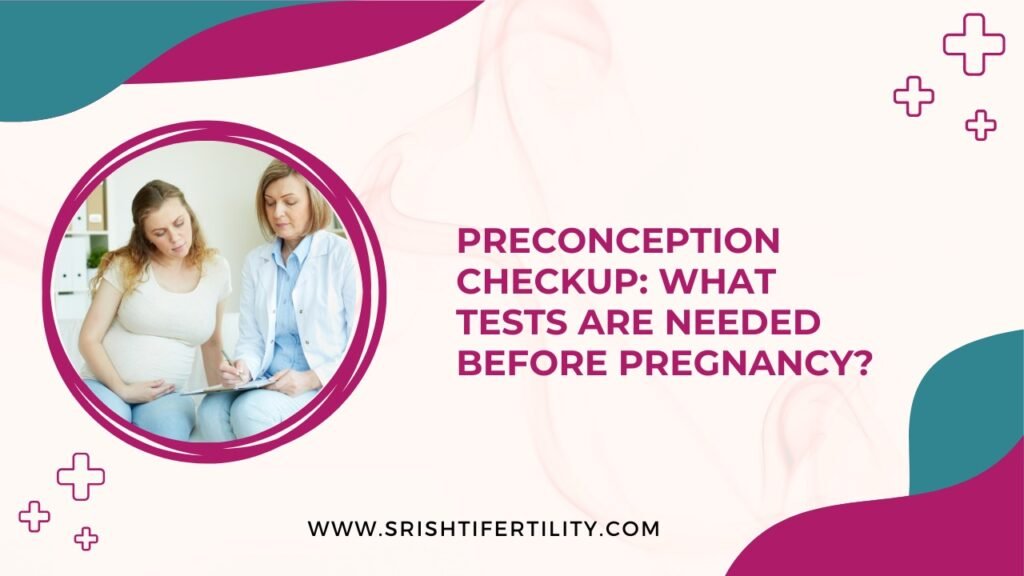
A preconception checkup is a doctor visit 3 to 6 months before you try to conceive. The main tests are CBC (hemoglobin), blood group and Rh factor, thyroid (TSH), blood sugar, infection screening, vitamin D and B12, pelvic ultrasound, Pap smear (if due), AMH (if advised) and a semen analysis for your partner. These tests find hidden problems early, so your pregnancy starts safe and healthy. You want a baby, but the questions keep coming. Is my body ready? Do we need any tests first? What if something is wrong and we find out too late? A preconception checkup gives you clear answers before you start trying. In this guide, the team at Srishti Fertility Hospital & IVF Center, Jaipur explains each test in simple words. You will also learn when to go, what to expect and which mistakes to avoid. Why Is a Preconception Checkup Important? A baby’s brain, spine and heart begin forming in the first few weeks. Many women do not even know they are pregnant by then. If you have low iron, high sugar or a thyroid problem, it is much better to fix it before pregnancy than during it. A health checkup before pregnancy helps you: Some facts worth knowing: When Should You Go for a Pregnancy Planning Checkup? Book your preconception checkup before pregnancy, at least 3 months before you plan to conceive. If you have a health condition, 6 months is better. Go earlier if you: Already trying? Meet a fertility specialist in Jaipur if you have not conceived in 12 months. If you are over 35, do not wait more than 6 months. 10 Tests Before Pregnancy: The Complete List During a preconception checkup, doctors usually suggest the pre pregnancy tests below. Not every test is needed for every woman. For example, AMH is usually advised if you are over 30, have irregular cycles or have been trying for a while. A Pap smear is done if it is due for your age. Your doctor will decide what suits you. # Test What It Checks Why It Matters 1 CBC and hemoglobin Anemia, infection Low iron affects mother and baby 2 Blood group and Rh factor Rh positive or negative Rh mismatch needs planning 3 Thyroid (TSH) Thyroid hormone level Affects ovulation and baby’s growth 4 Blood sugar (fasting, HbA1c) Diabetes risk High sugar can harm early pregnancy 5 Infection screening HIV, hepatitis B and C, syphilis, rubella, chickenpox immunity Protects the baby from infections 6 Vitamin D and B12 Nutrient levels Very common deficiencies in India 7 Pelvic ultrasound Uterus, ovaries, fibroids, cysts Finds structural problems 8 Pap smear (if due) Cervical health Detects early cell changes 9 AMH (if advised) Egg reserve Helps in fertility planning 10 Semen analysis (partner) Sperm count, movement, shape Male factors cause many delays These are also called blood tests before pregnancy, preconception tests or preconception screening. If thalassemia runs in your family, ask about carrier screening too. If your periods are irregular, your doctor may also check for PCOS. Preconception Checkup Step by Step Here is what a normal visit looks like: What Happens in Preconception Counselling? Preconception counselling is the talking part of your visit. It matters as much as the reports. You can expect advice on: A simple example (for understanding only, not a real patient): Imagine a 31-year-old woman with irregular periods. Her tests show low hemoglobin and a high TSH. After a couple of months of treatment, both come back to normal, and she starts trying with more confidence. This is why early testing helps. Does Your Partner Need a Preconception Checkup Too? Yes. In many couples (roughly 40 to 50%), a male factor plays a part in delayed pregnancy. A semen analysis is simple, painless and gives quick answers. Men may also need a blood sugar test, an infection screen and advice on smoking and alcohol. If the report is abnormal, read about male infertility causes and treatment. Preconception Tests in India: Cost and Tips Most preconception tests in India are easy to find at hospitals and labs. A basic preconception checkup often comes as a package, so ask for one. Prices vary by city and lab, so confirm the cost before you book. Keep these tips in mind: Preconception vs Normal Checkup Point Normal Checkup Preconception Checkup Goal General health Safe pregnancy planning Fertility tests Usually not included Ultrasound, AMH, semen analysis (as advised) Vaccine review Rarely Rubella, chickenpox, hepatitis B Counselling Limited Folic acid, medicines, lifestyle Common Mistakes to Avoid Preconception Checkup at Srishti Fertility Hospital, Jaipur At Srishti Fertility Hospital & IVF Center, Dr. Mamta Gupta and her team guide couples through pregnancy planning, from the first consultation to the right tests and treatment, if needed. If your reports show a fertility issue, the same team can guide you on the next step, from medicines to IUI treatment or IVF treatment in Jaipur, only when it is truly required. Key Takeaways Frequently Asked Questions 1. What is a preconception checkup? It is a doctor visit before pregnancy to check your health, run basic tests and plan a safe pregnancy. 2. Which tests are needed before pregnancy? CBC, blood group, thyroid, blood sugar, infection screening, vitamin levels, pelvic ultrasound and semen analysis. A Pap smear and AMH are added if advised. 3. When should I start tests before trying to conceive? 3 to 6 months before. Start earlier if you are over 35 or have a medical condition. 4. Is a pre-pregnancy checkup necessary? It is not mandatory, but it is strongly advised. It catches silent problems that can affect you and your baby. 5. Which blood tests before pregnancy are most important? Hemoglobin, blood group, TSH, blood sugar, and hepatitis B, HIV and rubella status. 6. Do men need preconception tests? Yes. A semen analysis is the main test, along with a general health review. 7. Can I get my tests done at a local lab? Yes. Just have a gynecologist review the reports so
Preconception Checkup: What Tests Are Needed Before Pregnancy? Read More »