

Which Size of Fibroid Is Dangerous? Complete Fibroid Size Chart in MM & CM
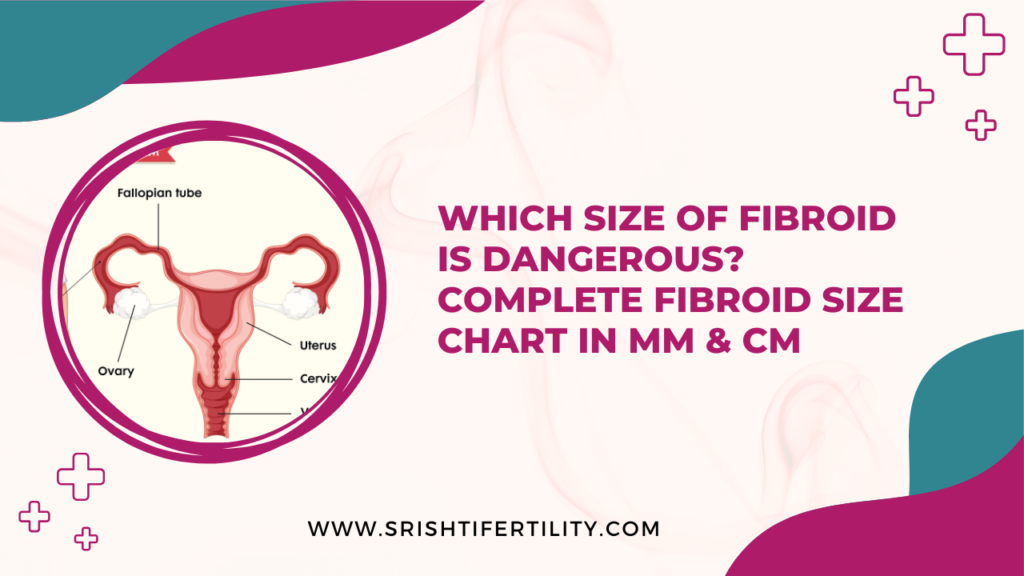
Medically Reviewed by Fertility & Gynecology Experts at Srishti Hospital and IVF Center Jaipur Which Size of Fibroid Is Dangerous? A fibroid is generally considered potentially dangerous when it grows larger than 5–7 cm (50–70 mm), causes heavy menstrual bleeding, severe pelvic pain, infertility, repeated miscarriages, or pressure on nearby organs. However, which size of fibroid is dangerous depends not only on size but also on its location, growth rate, and symptoms. What Are Uterine Fibroids? Uterine fibroids, also known as myomas or leiomyomas, are non-cancerous growths that develop in or around the uterus. They are extremely common, affecting up to 70–80% of women before age 50. Fibroids vary greatly in size. Some are microscopic, while others can grow large enough to enlarge the abdomen. Many women diagnosed with fibroids immediately ask, which size of fibroid is dangerous? Understanding fibroid size and symptoms can help determine when treatment may be necessary. Which Size of Fibroid Is Dangerous? The answer to which size of fibroid is dangerous depends on several factors. Generally: A small fibroid can sometimes be more problematic than a larger one if it is located inside the uterine cavity. Direct Answer A fibroid becomes potentially dangerous when it causes: Fibroid Size Chart in MM & CM Many women search for a fibroid size chart to understand whether their fibroid is normal. Category Size in MM Size in CM Very Small 1–10 mm 0.1–1 cm Small 10–30 mm 1–3 cm Medium 40–60 mm 4–6 cm Large 70–100 mm 7–10 cm Very Large 100+ mm 10+ cm This uterine fibroid size chart helps explain how doctors classify fibroids. Fibroid Size Comparison Chart Fibroid Size Comparable Object 1 cm Pea 2 cm Blueberry 3 cm Grape 5 cm Lemon 7 cm Orange 10 cm Grapefruit 15 cm Melon This visual comparison makes it easier to understand fibroid sizes in mm and cm. What Is the Normal Size of Fibroids in the Uterus? There is no officially defined uterine fibroid normal size because fibroids are abnormal growths. However: When discussing fibroid normal size in mm, doctors typically consider anything under 30 mm relatively small. Intramural Fibroid Normal Size in MM Intramural fibroids develop within the muscular wall of the uterus. The typical intramural fibroid normal size in mm is often: Treatment depends on symptoms rather than size alone. Is a 3 cm Fibroid Dangerous? A 3 cm uterine fibroid is generally considered small. Quick Answer A 3 cm fibroid is usually not dangerous and often requires monitoring rather than surgery. However, treatment may be necessary if it causes: Is a 5 cm Fibroid Dangerous? One of the most searched questions is whether a 5 cm fibroid is dangerous. Quick Answer A 5 cm fibroid may become problematic if it causes symptoms or affects fertility. Possible complications include: Women asking which size of fibroid is dangerous often discover that symptoms matter more than size alone. Is a 7 cm Fibroid Dangerous? A 7 cm fibroid in uterus is considered large. Quick Answer Yes, a 7 cm fibroid can be dangerous because it may significantly affect daily life and reproductive health. Large fibroids can cause: This is why many doctors begin considering treatment options when a fibroid reaches this size. What Size Fibroids Need Surgery? Another common question is what size fibroids need surgery. There is no universal size requirement. Surgery may be recommended when: The decision is always individualized. Fibroid Surgery Decision Chart Fibroid Size Surgery Usually Needed? 1–3 cm Rarely 4–5 cm Sometimes 6–7 cm Depends on symptoms 8–10 cm Frequently 10 cm+ Commonly recommended This chart helps answer fibroid size for surgery and myoma size for surgery questions. Are Fibroids Dangerous During Pregnancy? Many women wonder whether are uterine fibroids dangerous during pregnancy. Large fibroids can increase the risk of: Women planning pregnancy should undergo proper evaluation. Can Fibroids Cause Infertility? Yes. Fibroids may: At Srishti Hospital and IVF Center Jaipur, fertility specialists evaluate how fibroids may impact conception and pregnancy outcomes. Symptoms Based on Fibroid Size Small Fibroids (1–3 cm) Medium Fibroids (4–6 cm) Large Fibroids (7 cm+) When Should You See a Doctor? Consult a gynecologist if you experience: Early diagnosis can prevent complications. Why Choose Srishti Hospital and IVF Center Jaipur? Srishti Hospital and IVF Center Jaipur is dedicated to women’s reproductive health and fertility care. Our specialists provide: ✔ Advanced fibroid diagnosis ✔ Fertility assessment ✔ Personalized treatment plans ✔ IVF and fertility services ✔ Minimally invasive gynecological care Whether you are concerned about which size of fibroid is dangerous, fertility challenges, or treatment options, our expert team is here to help. Frequently Asked Questions Which size of fibroid is dangerous in mm? Fibroids larger than 50–70 mm are more likely to cause symptoms and complications. What size fibroids need surgery? Surgery may be recommended for fibroids larger than 5–7 cm, especially when symptoms are severe. What is the average fibroid size? Most fibroids are between 2–5 cm at diagnosis. Is a 5 cm fibroid dangerous? It can be if it causes heavy bleeding, fertility problems, or severe pain. Is a 7 cm fibroid dangerous? Yes, a 7 cm fibroid is considered large and may require treatment. Are fibroids dangerous? Most fibroids are non-cancerous, but some can cause significant symptoms and complications. Is myoma dangerous? Most myomas are benign, but large or symptomatic myomas may require treatment. What is the normal size of fibroids in the uterus? Fibroids under 3 cm are generally considered small and often monitored. Can fibroids become cancerous? The vast majority of fibroids remain non-cancerous. Can fibroids shrink naturally? Some fibroids may shrink after menopause due to hormonal changes. Conclusion If you are wondering which size of fibroid is dangerous, remember that fibroids larger than 5–7 cm are generally more likely to cause symptoms and complications. However, location, growth rate, and symptoms are equally important factors. Early diagnosis and expert medical guidance can help prevent complications and protect fertility. For comprehensive fibroid evaluation, fertility assessment, and personalized treatment, consult the experienced specialists
Which Size of Fibroid Is Dangerous? Complete Fibroid Size Chart in MM & CM Read More »