

1st Month Pregnancy Symptoms: Pregnancy Ke Lakshan & Early Signs Before Missed Period
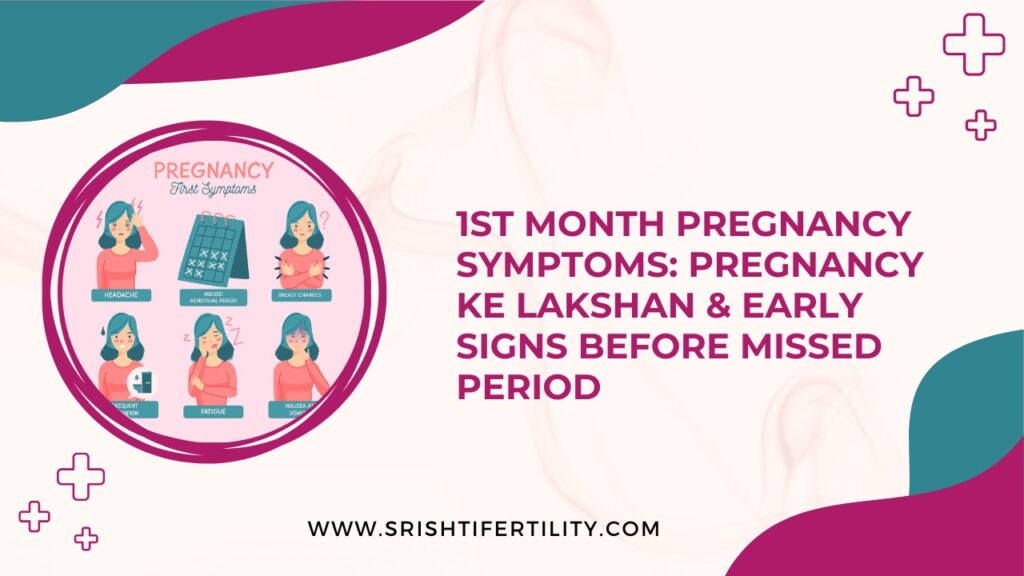
Reviewed by Dr. Mamta Gupta — Director & HOD, Gynaecology & Fertility, Srishti Hospital and IVF Centre (24+ years of experience, 25,000+ cycles) Last updated: [insert current date] Introduction Most women associate pregnancy with a missed period, but for many, the body starts sending signals well before that — Understanding these 1st month pregnancy symptoms can help you identify pregnancy at an early stage. Because these early signs overlap so closely with premenstrual symptoms like fatigue, breast tenderness, or light spotting, it’s easy to dismiss them or not notice them at all. That overlap is exactly why so many women only realise they’ve missed early cues once they look back after a positive test. Paying attention to these subtle changes matters for a practical reason too: the first few weeks are when prenatal care ideally begins, and when habits like alcohol, smoking, or certain medications can affect a developing embryo the most. You might not “feel” pregnant in any dramatic way during this stage — no visible bump, no strong nausea, nothing that screams pregnancy. But underneath, your hormones are already shifting, and the foundation for the next nine months is quietly being laid. This guide breaks down what actually happens in the first month, the common and less-common 1st month pregnancy symptoms to watch for, how to tell them apart from ordinary PMS, and when testing will actually give you a reliable answer. (Padhna chahte hain Hindi mein? Dekhein hamari alag guide: Pregnancy Symptoms in Hindi.) Understanding the First Month of Pregnancy Doctors count pregnancy from the first day of your last period, not from the day you actually conceive. That’s why “week 1” of pregnancy technically falls before ovulation even happens — a detail that confuses a lot of first-time mothers. Once ovulation and fertilisation do occur (usually around the middle of your cycle), the embryo takes about a week to travel to the uterus and implant. That’s the point where hCG starts being produced and estrogen and progesterone begin shifting — which is what causes most 1st month pregnancy symptoms described below. . By the time your period is actually due, in week 4, your body has already been adjusting to these hormones for a while, even if you don’t feel any different yet. 1st Month Pregnancy Symptoms (Pregnancy Ke Lakshan) The most commonly reported 1st month pregnancy symptoms include implantation spotting, fatigue, breast tenderness, mood swings, nausea, and frequent urination. 1. Implantation bleeding. Light spotting, usually pink or light brown rather than red, that happens when the fertilised egg attaches to the uterine lining. It tends to last a few hours to two days and is often lighter than a normal period. Mild cramping can come with it. 2. Fatigue. Progesterone rises sharply in early pregnancy, and this hormone is directly linked to sleepiness. Combine that with the extra blood your body is producing to support the embryo, plus a slight dip in blood sugar and blood pressure, and you end up tired even after a full night’s sleep. 3. After 1st Month Pregnancy Symptoms Mood swings. Estrogen and progesterone affect serotonin levels in the brain, which is why you might feel unusually emotional, teary, or short-tempered. This one gets mistaken for PMS constantly. 4. Nausea and food aversions. Classic morning sickness usually starts around week 5 or 6, but some women feel queasy or suddenly can’t stand certain smells as early as week 3. 5. Breast tenderness. Hormonal changes increase blood flow to breast tissue, so soreness, heaviness, or fullness can show up early — sometimes before you’d expect your period. The areolas may also darken slightly. 6. Frequent urination. The uterus hasn’t grown enough yet to physically press on the bladder, but rising hCG increases blood flow to the pelvic area and pushes the kidneys to filter more fluid, which sends you to the bathroom more often. Less Common Early Signs Besides the symptoms above, a few less-talked-about signs also show up in early pregnancy — a metallic taste, heightened smell, cramping without bleeding, bloating, a raised body temperature, and mild headaches. 7. Metallic taste (dysgeusia). Some women describe it as sucking on a coin. It’s caused by rising estrogen interfering with taste perception, and it can make familiar foods taste “off.” 8. Heightened sense of smell. Ordinary smells — perfume, coffee, someone cooking — can suddenly feel overwhelming. For some women this is the very first thing they notice. 9. Cramping without spotting. Not every woman gets visible bleeding with implantation. Some just feel period-like cramps as the uterus adjusts. If cramping is one-sided, severe, or paired with dizziness, it’s worth ruling out other causes — read about ectopic pregnancy symptoms to know when to seek urgent care. 10. Bloating. Progesterone slows digestion down, which causes a heavy, bloated feeling similar to what you might feel right before a period — one reason this symptom often goes unnoticed. 11. A basal body temperature that stays up. If you track BBT, a temperature that remains elevated for more than 18 days after ovulation instead of dropping is a fairly reliable early clue. 12. Headaches or light-headedness. Hormonal shifts and changing blood circulation in the first days after conception can trigger mild headaches. PMS vs Pregnancy Symptoms The easiest way to tell PMS and early pregnancy apart is timing: PMS symptoms fade once your period starts, while pregnancy symptoms tend to stick around or get stronger. Symptom PMS Early Pregnancy Spotting Rare, right before period Light pink/brown, 6–12 days after ovulation Cramping Stronger, stops once period starts Milder, can continue past the expected period date Breast tenderness Eases once period starts Persists, often gets more intense Fatigue Mild, better with rest Doesn’t go away even with enough sleep Nausea Uncommon Fairly common, often paired with smell sensitivity Duration Resolves within days Continues into the following weeks If your usual PMS suddenly feels stronger than normal, lasts longer, or your period just doesn’t show up — that’s when it’s worth taking a test. When Do
1st Month Pregnancy Symptoms: Pregnancy Ke Lakshan & Early Signs Before Missed Period Read More »