
Blog

food for painless normal delivery

10 Foods That Make Painless Normal Delivery Easier

Bringing a new life into the world is magical, but every mother wishes for a smooth and painless normal delivery. While medical support and exercises are essential, what you eat during pregnancy plays a vital role in preparing your body for labor. In this blog, Dr. Mamta Gupta from a leading Sonography and IVF Center in Jaipur shares the top 10 foods that make painless normal delivery easier, along with useful comparisons, practical tips, and answers to common questions mothers-to-be ask. Why Diet Matters for Normal Delivery? A balanced diet, combined with exercise for normal delivery, can increase your chances of experiencing a natural, smoother birth. 10 Foods That Support Painless Normal Delivery 1. Dates – Nature’s Sweet Energy Booster Dates are a powerhouse for pregnant women. Multiple studies suggest that women who consume 6 dates daily during their last month of pregnancy experience smoother labor. 2. Leafy Greens – The Ultimate Uterus Strengtheners Spinach, kale, fenugreek, and other green vegetables are pregnancy superfoods. 3. Bananas – Natural Anti-Cramp Food Bananas are a quick and easy snack that can instantly energize expecting moms. 4. Whole Grains – Fuel for Endurance During Labor Labor is physically demanding, sometimes lasting hours. Whole grains ensure steady energy release. 5. Legumes & Lentils – Muscle & Tissue Builders Protein is the building block for both mother and baby. Lentils and legumes are excellent vegetarian sources. 6. Avocados – The Hormone Balancers Often called “pregnancy gold,” avocados are rich in healthy fats that regulate hormones. 7. Nuts & Seeds – Tiny But Mighty Labor Friends Small in size but high in nutrition, nuts and seeds are a must for mothers-to-be. 8. Sweet Potatoes – The Natural Healers Sweet potatoes are not only delicious but also provide essential nutrients for both mother and child. 9. Citrus Fruits – The Immunity Protectors Fruits like oranges, lemons, and grapefruits are refreshing and nutrient-packed. 10. Yogurt & Dairy – Strong Bones, Smooth Labor Calcium-rich foods like yogurt, milk, and paneer play a direct role in strengthening bones and muscles. Other Normal Delivery Tips Conversational FAQs: Your Concerns Answered Q1: Normal delivery kaise hota hai? Ans: Normal delivery happens when the baby is delivered through the birth canal naturally without surgical intervention. Proper diet, regular exercise, and mental preparation improve your chances. Q2: Can foods really make labor painless? Ans: While food alone won’t eliminate pain, a nutrient-rich diet gives energy, strengthens muscles, and supports smoother contractions – making the process easier. Q3: Should I completely avoid junk food during pregnancy? Ans: Yes, it’s best to avoid processed foods, excessive caffeine, and fried snacks. They add empty calories and can make labor more exhausting. Q4: What’s better for preparing my body – exercise or diet? Ans: Both are equally important. A healthy diet gives strength, while exercise for normal delivery improves flexibility and endurance. Q5: Can I still need medical help even after following these tips? Ans: Yes, every pregnancy is unique. Following normal delivery tips increases your chances, but your doctor will guide you depending on your condition. Also read: 5 Painless Normal Delivery Tips Every Mom-to-Be Must Know for a Smooth Birth Conclusion A painless normal delivery is a dream for every expecting mother. With the right foods, regular exercise, and guidance from experts like Dr. Mamta Gupta, you can prepare your body for a smoother labor. Remember, every step you take – from choosing wholesome foods like dates, leafy greens, and yogurt, to practicing breathing exercises – brings you closer to a safe and natural birth experience. Your journey doesn’t have to be overwhelming. Start with small dietary changes, stay active, and keep yourself positive. With the right support, your delivery can be both smooth and empowering.

10 Foods That Make Painless Normal Delivery Easier Read More »
5 Painless Normal Delivery Tips Every Mom-to-Be Must Know for a Smooth Birth

5 Painless Normal Delivery Tips Every Mom-to-Be Must Know for a Smooth Birth

Pregnancy is a beautiful journey, but the thought of labor often brings anxiety. Most expecting mothers wonder: “Is normal delivery painful? Can it be made easier?” The good news is, with the right guidance, preparation, and medical support, you can experience a painless normal delivery. In this blog, Dr. Mamta Gupta, a trusted gynecologist from Jaipur, shares 5 expert painless normal delivery tips to help every mom-to-be enjoy a smooth and stress-free birth experience. Why Choose Normal Delivery Over C-Section? Before we move to the tips, let’s quickly compare: Normal Delivery C-Section (Cesarean) Shorter recovery time Longer recovery period Lower risk of surgical complications Involves surgery & anesthesia Promotes natural bonding & breastfeeding Delayed mobility for mother Less hospital stay Higher hospital stay While C-sections are life-saving in certain cases, painless normal delivery is considered safer for both mother and baby when conditions allow. 5 Painless Normal Delivery Tips Every Mom-to-Be Should Follow 1. Stay Active During Pregnancy 2. Practice Breathing & Relaxation Techniques 3. Maintain a Balanced Diet 4. Consider Painless Delivery Options (Epidural) 5. Regular Checkups & Sonography How to Prepare for Painless Normal Delivery During Pregnancy Preparation for a painless normal delivery doesn’t start in the labor room—it begins much earlier, during pregnancy itself. The more you prepare your body and mind in advance, the smoother the delivery experience becomes. 1. Physical Preparation 2. Mental Preparation 3. Nutritional Preparation 👉 Key Takeaway: Preparation is a combination of physical fitness, mental readiness, and nutritional care. By focusing on these areas, expecting mothers can make painless normal delivery much more achievable. Modern Medical Approaches That Make Normal Delivery Less Painful One of the biggest reasons women opt for a C-section is the fear of unbearable labor pain. But with modern medicine, hospitals and specialists like Dr. Mamta Gupta in Jaipur offer techniques that make normal delivery smooth and nearly pain-free. 1. Epidural Anesthesia – The Gold Standard 2. Entonox (Laughing Gas) 3. Non-Medical Pain Relief Options 4. Advanced Monitoring & Sonography 5. Supportive Birthing Environment FAQs on Painless Normal Delivery Q1: Is painless normal delivery completely pain-free? 👉 No delivery is 100% pain-free, but epidurals and relaxation techniques can significantly reduce pain. Q2: Normal delivery kaise hota hai? 👉 Normal delivery happens through natural vaginal birth, assisted by contractions. With proper guidance and care, it can be smooth and less stressful. Q3: Is C-section safer than normal delivery? 👉 Both have pros and cons. C-sections are essential in complicated pregnancies, but painless normal delivery is usually the preferred choice for faster recovery and natural bonding. Q4: Can IVF mothers also go for normal delivery? 👉 Yes, if there are no major complications. With proper monitoring at a sonography and IVF center in Jaipur, IVF moms can also have a normal delivery. Q5: Who is the best doctor in Jaipur for painless normal delivery? 👉 Dr. Mamta Gupta, a reputed gynecologist in Jaipur, is known for safe deliveries, IVF expertise, and compassionate maternity care. Why Choose Dr. Mamta Gupta in Jaipur? Conclusion Motherhood is a life-changing experience, and every mom deserves a safe and smooth birth. With the right lifestyle, breathing techniques, medical support, and guidance from an expert like Dr. Mamta Gupta, painless normal delivery is very much possible. If you’re an expecting mom or planning for pregnancy, consult Dr. Mamta Gupta at a trusted sonography and IVF center in Jaipur to make your journey towards motherhood a beautiful and pain-free experience.

5 Painless Normal Delivery Tips Every Mom-to-Be Must Know for a Smooth Birth Read More »

What Is The Difference Between PCOS and PCOD 2 1st Month First Week Pregnancy ke Lakshan Janein

1st Month First Week Pregnancy ke Lakshan Janein

Kya aap soch rahi hain ki aap maa banne wali hain? Pregnancy ke shuruaati hafte ek anokha samay hote hain—jisme aapke sharir me chhupke se kai parivartan hone lagte hain. Lekin sabse badi baat, in parivartanon ko pehchan paana hamesha aasaan nahi hota. Pehle mahine ke pehle hafte ke lakshan aksar halki khushbu jaise hote hain—nazuk, par gahre maayne wale. Chaliye, hum aapko batate hain ki kaise aap apne sharir ke in subtle signs ko samajh kar apni pregnancy ka pehla kadam le sakti hain. 1st Month First Week Pregnancy ke Lakshan – Pehchaan Kaise Karein? Pregnancy ke is shuruaati stage me fertilized egg aapke uterus me implant hota hai. Is process ke dauran, hormonal level—khaas kar hCG aur progesterone—badalne lagte hain, jo aapke sharir me naye reactions create karte hain. Expanded Signs: 💡 Tip: Agar aapko ye lakshan lagataar dikh rahe hain, to home pregnancy test lena ek acha idea hai. Period Se Pehle Pregnancy ke Lakshan Period se pehle jo pregnancy ke signs aate hain, wo PMS ke signs jaise lag sakte hain, lekin kuch subtle fark hota hai: Pregnancy Me Ladka Hone ke Lakshan – Myths vs Science Bhartiya parampara me kuch purani kahaniyan chalti hain: 🔍 Scientific Reality: Inme se koi bhi medically proven nahi hai. Baby ka gender sirf ultrasound me legally & medically hi confirm hota hai. Key Points: Early Pregnancy Signs Par Dhyan Kyun Zaroori Hai? Interactive Section – Apna Experience Share Karein 💬 Sawal: Aapne apne 1st month me kaunsa sabse pehla sign notice kiya tha?📢 Apna experience comments me likhiye, taaki doosri mahilayein bhi aapke journey se seekh saken. Sahi Diagnosis Kaise Karein? FAQ – 1st Month First Week Pregnancy ke Common Questions Q1: Kya pehle hafte me pregnancy ka pata chal sakta hai? ➡ Haan, lekin zyada accurate result period miss hone ke baad aata hai. Q2: Implantation bleeding kitne din hoti hai? ➡ Aksar 1–3 din, halka spotting ke roop me hoti hai. Q3: Kya mood swings pregnancy ka first sign hai? ➡ Bilkul, hormonal changes mood pe direct effect dalte hain. Q4: Ladka ya ladki ka pata kab chalta hai? ➡ Sirf 18–20 hafte ke ultrasound me, medical guidelines ke hisaab se. Q5: Kya pehle mahine me heavy exercise safe hai? ➡ Heavy exercise avoid karein, light walking ya yoga better option hai. Srishti Hospital and IVF Centre – Aapka Saathi Maa Banne Ki Yatra Me Jaipur ka trusted IVF & Maternity Centre, jaha advanced facilities aur experienced gynecologists aapki pregnancy journey ko safe banate hain. IVF, normal delivery, high-risk pregnancy care – sab ek hi roof ke neeche. Conclusion 1st Month First Week Pregnancy ke lakshan ko samajhna aapke liye ek emotional aur medical dono point of view se zaroori hai. Apne sharir ke signals ko ignore na karein, aur timely medical advice lein. Srishti Hospital and IVF Centre hamesha aapke saath hai, taaki aapka motherhood journey safe aur memorable ho.

1st Month First Week Pregnancy ke Lakshan Janein Read More »

1st Month Pregnancy Symptoms (Pregnancy Ke Lakshan): Early Signs & Day-by-Day Timeline

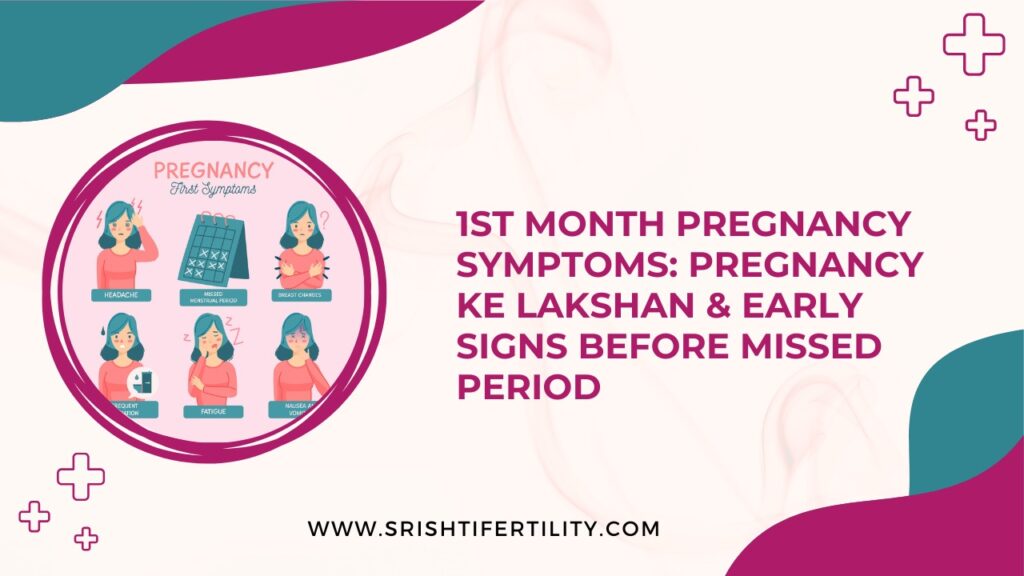
1st Month Pregnancy Symptoms (Pregnancy Ke Lakshan): Early Signs & Day-by-Day Timeline

By Srishti Fertility Team | Medically reviewed by Dr. Mamta Gupta, Director & HOD, Gynaecology & Fertility, Srishti Hospital and IVF Centre, Jaipur (24+ years of experience, 25,000+ cycles) | Last updated: October 31, 2026 The most common 1st month pregnancy symptoms are a missed period, light spotting, tiredness, sore breasts, nausea, mood swings, bloating and needing to pee more often. Most women notice them around weeks 4 to 6 of pregnancy, counted from the first day of the last period. That is about when your period is due. Some women feel something a few days earlier, and some feel nothing at all. Both are normal. Symptoms alone cannot confirm pregnancy. Only a test can. Is your period late and your body feeling a little different? You are not imagining it. Early pregnancy signs look a lot like PMS, so it is easy to feel confused. This guide tells you what you may feel in the first month, how to tell it from PMS, when to take a test, and which signs need a doctor right away. This article is for general information only. It is not medical advice, diagnosis or treatment. Please consult a qualified doctor about your own health. What Happens in the First Month of Pregnancy? Doctors count pregnancy from the first day of your last period, not from the day you conceive. So in “week 1” you are not pregnant yet. This confuses many first-time mothers. Here is how the first four weeks work in a typical 28-day cycle: Pregnancy week What is happening What you may feel Week 1 Your period. The uterine lining is shedding. Period symptoms only. You are not pregnant yet. Week 2 The egg matures and ovulation gets close. Nothing from pregnancy. Some women notice fertile discharge. Week 3 Ovulation and fertilisation. The embryo starts moving towards the uterus. Usually nothing. Week 4 The embryo attaches (implants) and the body starts making hCG. Your period is due. Spotting, cramps, tiredness, sore breasts, a missed period. After implantation, hCG rises and estrogen and progesterone change. These hormones cause most early symptoms. If you want to understand hormones better, read Harmons Kya Hota Hai. Pregnancy Symptoms in the 1st Week: Kya Sach Me Hote Hain? Usually, no. In the first week you are on your period, so whatever you feel comes from your cycle, not from pregnancy. If you mean one week after conception (about 7 days after ovulation), you may notice: A pregnancy test is usually still negative at this point, because hCG has not built up enough yet. Early Signs of Pregnancy Before a Missed Period No single sign proves pregnancy. But these are the ones women usually notice first. The earliest signs (may show up before your period is due) Signs that usually come a little later (around weeks 4 to 6) The most reliable sign A small tip about temperature. If you track your basal body temperature (your resting temperature), a high reading that stays up for 18 days or more after ovulation can be an early clue. It is only a clue, not a test. Illness, poor sleep and stress can also change it. Day-by-Day Timeline: Kab Kya Feel Ho Sakta Hai? Many women ask about “10 days” or “15 days” pregnancy symptoms. The days below are counted after ovulation. Treat this as a rough guide, because every woman is different. Days after ovulation What is happening What you may notice 1 to 5 days Fertilisation. The embryo travels to the uterus. Usually nothing 6 to 10 days Implantation Light spotting, mild cramps, sore breasts, tiredness 10 to 14 days hCG rises quickly More tiredness, bloating, mood swings, strong smells 14 to 15 days Your period is due A missed period. A home test is now reliable. 15 to 28 days Hormones keep rising Nausea, peeing more often, food dislikes When Do Pregnancy Symptoms Start? (After How Many Days) The NHS says symptoms usually start when you are around 4 to 6 weeks pregnant, counted from your last period. That is roughly 2 to 4 weeks after conception. A few signs, like spotting or unusual tiredness, can appear as early as 6 to 10 days after ovulation. Many women notice nothing until after a missed period. PMS or Pregnancy? How to Tell the Difference Timing is the easiest clue. PMS symptoms fade once your period starts. Pregnancy symptoms stay or get stronger. Symptom PMS Early pregnancy Spotting Rare, right before the period Light pink or brown, 6 to 12 days after ovulation Cramps Stronger, stop once the period starts Milder, may continue past the expected date Breast tenderness Eases once the period starts Stays and often gets stronger Tiredness Mild, better with rest Continues even with enough sleep Nausea Uncommon Fairly common, often with smell sensitivity How long Gone within a few days Continues into the next weeks A late period does not always mean pregnancy. Stress, weight changes, thyroid problems, PCOD/PCOS, breastfeeding and some medicines can also delay periods. If your periods are often irregular, or you have ongoing pelvic or period pain, please see a gynaecologist. Pregnancy Ke Lakshan in Hindi (गर्भावस्था के लक्षण) Pregnancy ke lakshan pehle mahine me period miss hone, halki spotting, thakaan, breast me dard aur ulti jaisa mann hone se shuru hote hain. Ye lakshan PMS, stress ya hormonal problems me bhi ho sakte hain, isliye sirf lakshan dekhkar pregnancy confirm nahi hoti. Period late hai to test karein. Pet ke ek taraf tez dard, zyada bleeding, chakkar ya behoshi ho to turant doctor ko dikhayein. Hindi me padhein: Ectopic Pregnancy in Hindi. When Should You Take a Pregnancy Test? Not sure how to read your result? See our guide on UPT test meaning, positive and negative results. Always follow the instructions on your kit, and remember that some medicines can affect test results. Warning Signs: See a Doctor Right Away If You Have These can be signs of an ectopic pregnancy, a miscarriage or another serious problem and need

1st Month Pregnancy Symptoms (Pregnancy Ke Lakshan): Early Signs & Day-by-Day Timeline Read More »

Fetal Weight Chart Week by Week – See Baby’s Growth!

Fetal Weight Chart Week by Week – See Baby’s Growth!

A Beautiful Journey Begins Pregnancy is an extraordinary journey—filled with anticipation, curiosity, and lots of questions. One of the most frequently asked questions by expecting parents is: “Is my baby growing properly?” Monitoring fetal growth is a crucial part of prenatal care, and understanding how your little one grows inside the womb week by week can be both reassuring and empowering. That’s where a fetal weight chart comes in. In this blog, we break down a detailed fetal weight chart week by week, help you understand growth patterns, and highlight how the experienced team at Srishti Hospital and IVF Centre supports you every step of the way. Let’s explore how your baby blossoms from a tiny dot to a cuddly bundle of joy! What Is a Fetal Weight Chart? A fetal weight chart is a medical reference tool that shows the average weight of a fetus at different stages of pregnancy. It helps doctors and parents understand whether the baby’s growth is on track. It’s important to note that every pregnancy is unique, and there may be slight variations. However, these charts offer a helpful guideline to assess your baby’s development. Fetal Weight Chart Week by Week Here’s a detailed week-by-week fetal development weight chart showing average fetal weight in grams and pounds: Week Average Weight (grams) Average Weight (pounds) 8 1 gram 0.035 oz 12 14 grams 0.5 oz 16 100 grams 3.5 oz 20 300 grams 10.5 oz 24 600 grams 1.3 lbs 28 1,000 grams 2.2 lbs 32 1,700 grams 3.75 lbs 36 2,600 grams 5.7 lbs 40 3,400 grams 7.5 lbs Please remember: These values are approximate. Your doctor may use ultrasounds, fundal height measurements, and Doppler imaging to assess actual fetal growth. Understanding Fetal Growth Milestones Each phase marks a significant milestone. Monitoring fetal weight ensures your little one is developing healthily and prepares healthcare providers for any necessary interventions. Is My Baby’s Growth on Track? Pregnancy is a journey filled with anticipation and questions — especially about your baby’s growth. Use this quick self-reflection checklist to assess whether everything seems to be progressing smoothly. (Reminder: This is a self-check guide, not a medical diagnosis. Always speak to your doctor for personalized advice.) ✅ Are you attending regular prenatal checkups? Regular prenatal visits are vital for tracking your baby’s development and your overall health. These appointments help your doctor monitor fetal growth, detect early signs of complications, and ensure timely vaccinations, screenings, and supplements (like iron and folic acid). Missing checkups can lead to undetected issues — so keep them a top priority. ✅ Has your doctor recommended any ultrasounds for fetal weight monitoring? Ultrasounds, especially during the second and third trimesters, are key tools for estimating fetal weight and size. Your doctor may schedule additional scans if there are concerns about growth patterns. These scans help detect conditions like IUGR (Intrauterine Growth Restriction) or macrosomia (excessive weight) early on, allowing for proper management. ✅ Are fetal kicks and movements consistent with your current pregnancy week? Feeling your baby move is one of the most reassuring signs of healthy development. Movements typically start between weeks 18–25 and become more noticeable and regular as pregnancy progresses. A sudden drop in movement or no movement at all should be reported to your doctor immediately. ✅ Have you experienced any sudden weight changes or abnormalities? Your own weight gain is a useful indicator of your baby’s growth. While every pregnancy is unique, sudden or excessive weight gain may signal conditions like gestational diabetes, while very little gain could indicate fetal growth concerns. Keeping a steady, doctor-approved gain is essential. ✅ Is your doctor concerned about intrauterine growth restriction (IUGR) or macrosomia (excessive fetal weight)? If your doctor has mentioned either of these terms, they’re monitoring your baby’s growth closely. Your Takeaway: If you answered “no” to any of the above, don’t worry—just bring it up at your next appointment at Srishti Hospital and IVF Centre. Our expert OB-GYNs are here to guide and support you. How Srishti Hospital and IVF Centre Supports You At Srishti Hospital and IVF Centre, we understand that every pregnancy is a unique story. Our dedicated team of specialists provides: We walk beside you through every heartbeat, every sonogram, and every exciting milestone—ensuring your baby’s growth is healthy and strong. FAQs About Fetal Weight Charts Q: Can fetal weight be measured accurately during pregnancy?A: Ultrasounds provide an estimated fetal weight (EFW) based on measurements of the baby’s head, abdomen, and femur. While not 100% exact, it’s a reliable method. Q: What if my baby’s weight is below the chart?A: Don’t panic! Genetics, nutrition, and other factors may cause small variations. Your doctor may suggest closer monitoring or additional scans. Q: Can a fetus be too big?A: A heavier-than-average fetus (macrosomia) may lead to delivery complications. If identified early, your care team can plan a safe birth method. Conclusion: Tracking Tiny Triumphs Your baby’s growth is a miraculous process, and each week brings you one step closer to holding them in your arms. Understanding the fetal weight chart week by week gives you insights, comfort, and a sense of progress. At Srishti Hospital and IVF Centre, we believe in empowering parents through education, compassion, and expert prenatal care. From the first ultrasound to the final push in the delivery room—we’re here for you and your little miracle. — 🌐 Ready to monitor your baby’s growth with the best care?Book your consultation with Srishti Hospital and IVF Centre today.

Fetal Weight Chart Week by Week – See Baby’s Growth! Read More »

Scroll to Top

Meet Our Experts

SUBMIT YOUR QUERY


BOOK VACCINATION


BOOK A SCAN


BOOK A VIDEO CONSULTATION


BOOK AN APPOINTMENT